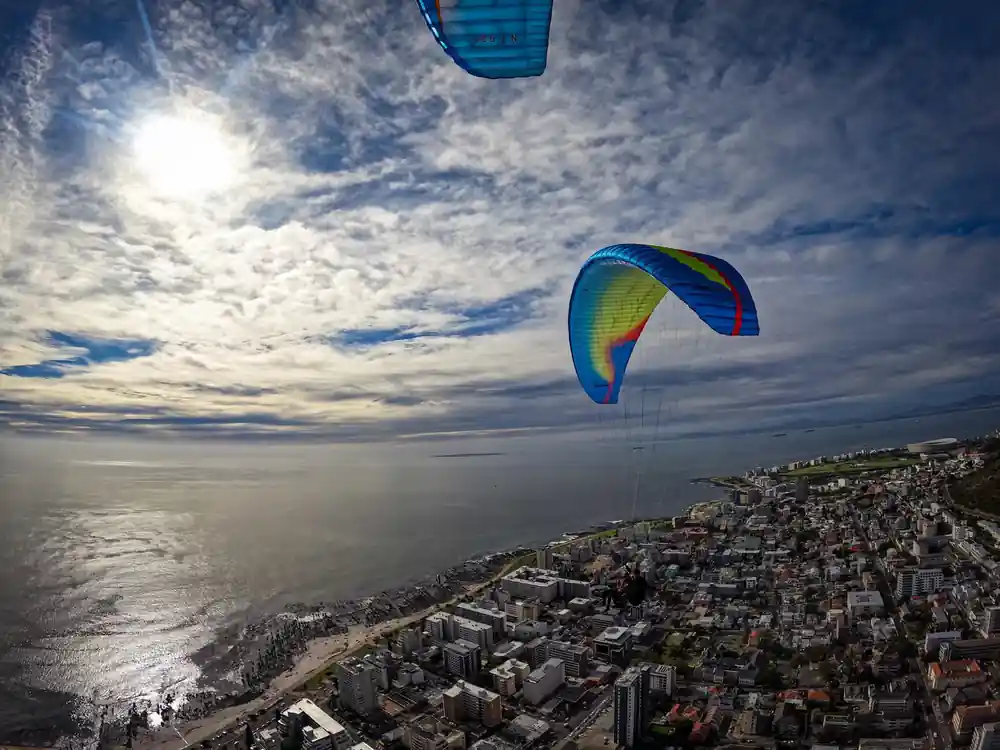
The quick version
- The flight leaves once the wind at Signal Hill allows it, not at a printed time, so build flexibility into the day you book it for.
- The operator asks you to get in touch on WhatsApp before the day, for the latest read on the wind and on Signal Hill itself.
- A calm morning in the city bowl or down at Sea Point tells you little about the air moving over the ridge at Signal Hill.
- Free cancellation is offered, so put the flight near the start of your stay rather than your last morning in Cape Town.
The Booking You Cannot Set a Time For
Most things booked in Cape Town happen at the hour printed on the ticket. Tandem paragliding from Signal Hill does not. The booking runs forty-five minutes from meeting to return, and only around fifteen of those minutes are spent at the launch, in the air. When inside that window the flight actually happens is decided by the wind moving over Signal Hill on the day, not by a printed schedule.
That is the trade worth naming before you book. You are exchanging a fixed hour for a flight over the Atlantic coastline, and the exchange works in your favour once you stop expecting a departure board and start expecting a call made on the day, close to the time, by someone standing at the launch rather than reading a forecast from a screen.
The Cape Doctor, By Name
Cape Town's summer brings a strong south-easterly wind with its own name: the Cape Doctor. It is talked about locally as a fixture of the season rather than a surprise on a forecast, and it is the wind that decides, more than any other single factor, whether a paragliding flight from Signal Hill goes ahead on a given day.
A launch built on a ridge only works from one side. Signal Hill's launch faces a particular direction, and the day's wind needs to be coming from close enough to it for a safe take-off. A day that feels warm and still down in the city can still be wrong at the launch, and a breezier one can be exactly what the wing needs.
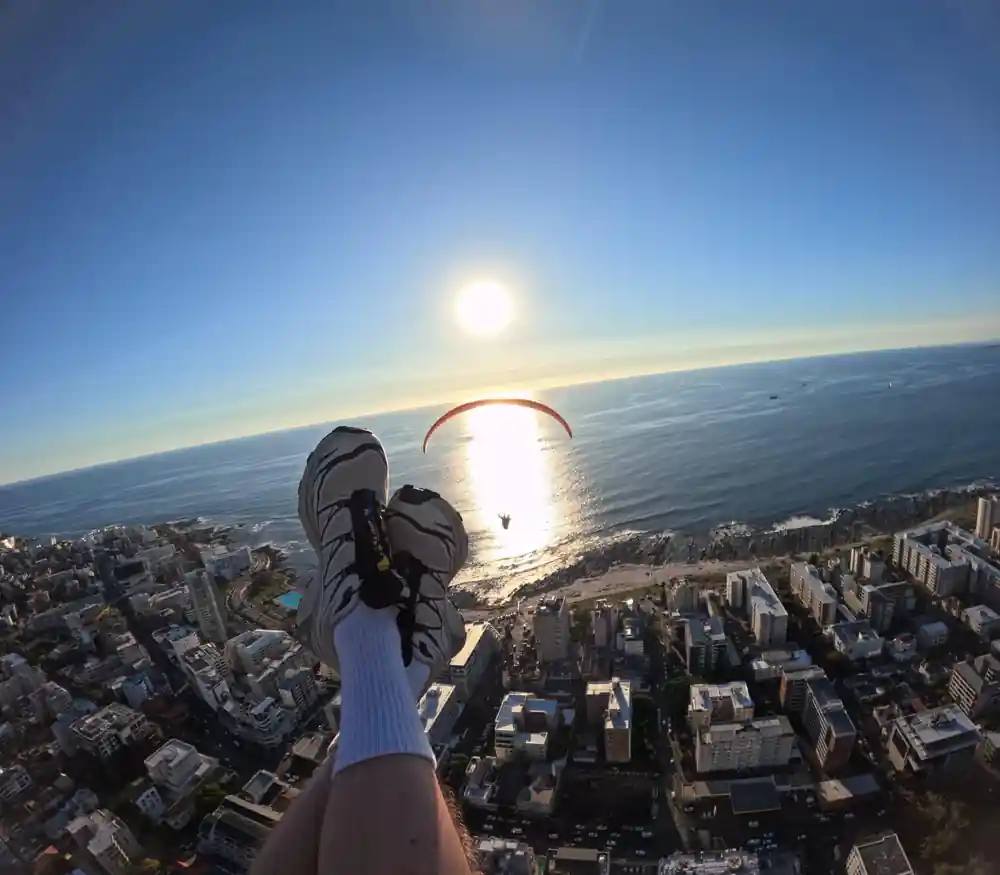
The road up Signal Hill, the exact spot where the day's wind gets its final read.
Wind in the City Is Not Wind on the Ridge
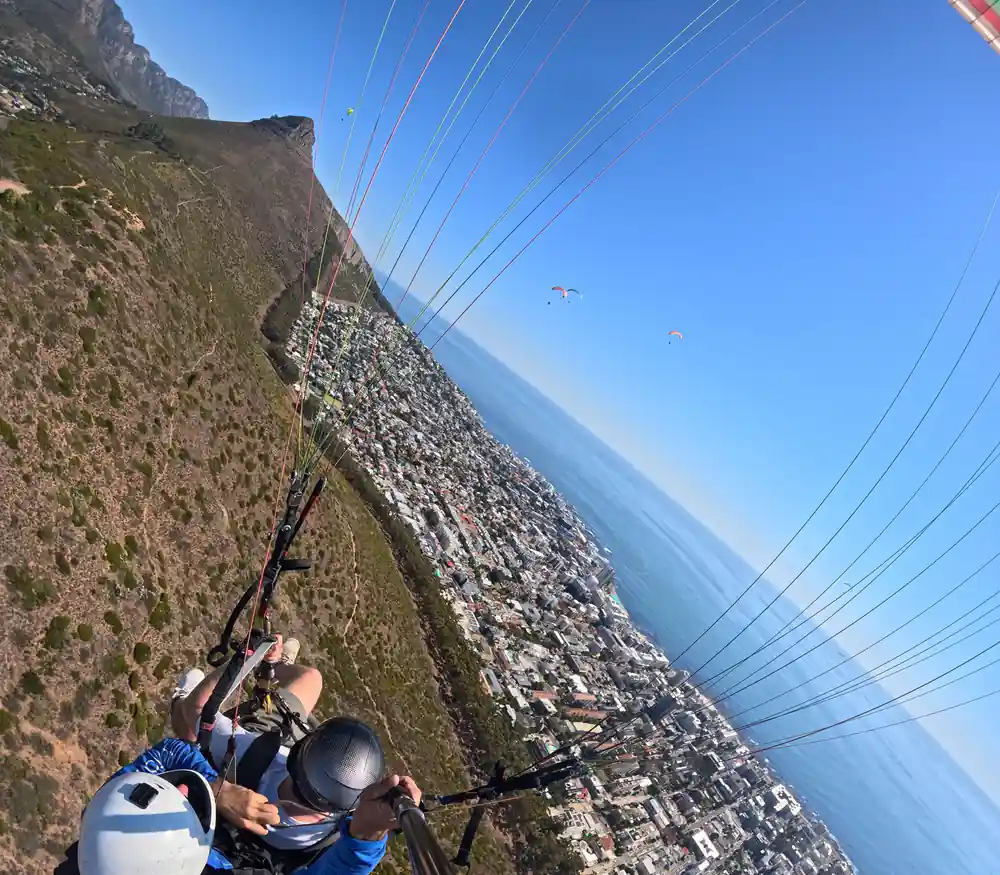
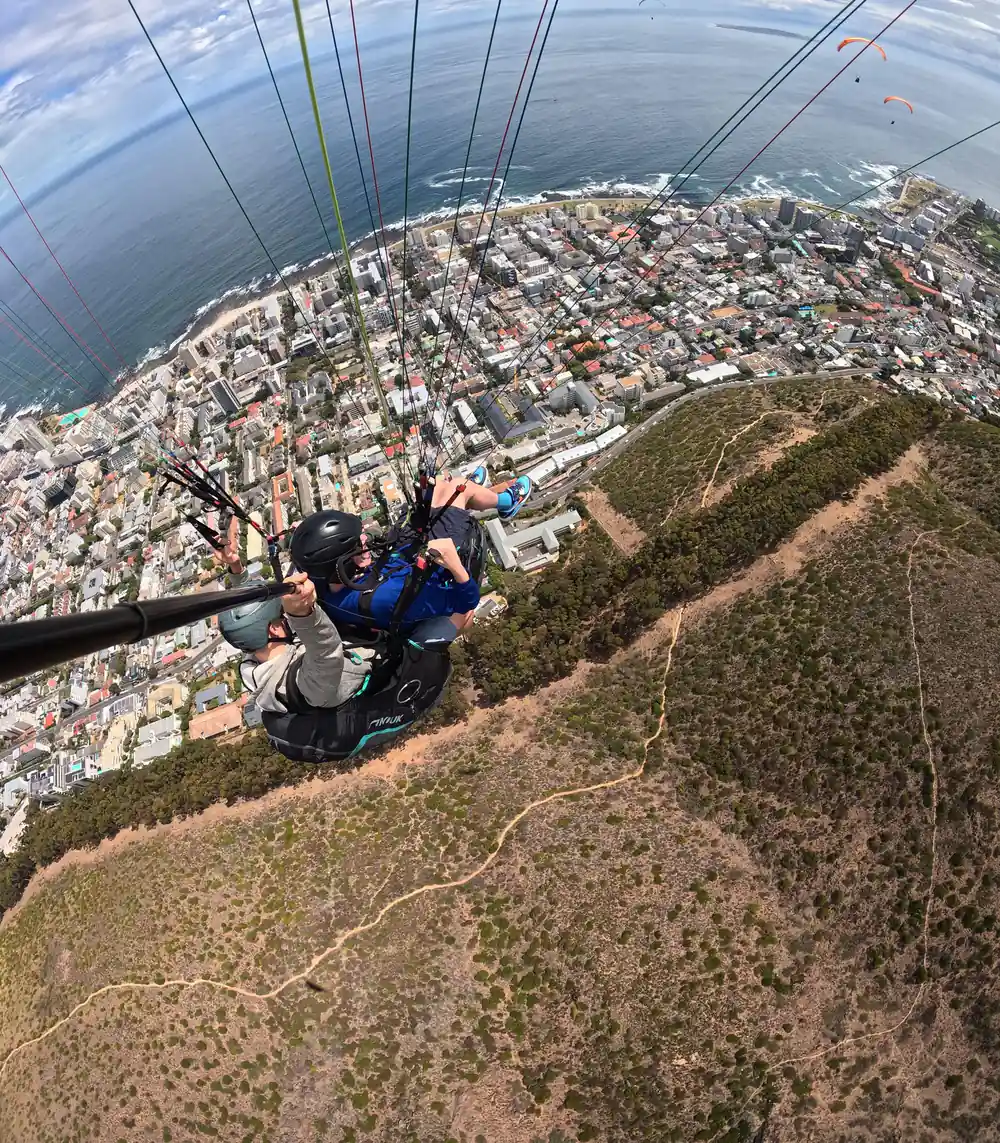
Signal Hill is the low ridge running north-west from the city bowl, next to Lion's Head, with a road up it and a car park at the top. A calm morning at street level, or a still one down at Sea Point on the Atlantic side, tells you very little about what the air is doing higher up, on the ridge itself.
There is no single best hour to book around, because the two locations do not share a forecast. A breeze that ruffles the flags at Sea Point can sit above a launch that is glassy at that same moment, and the reverse happens just as often. The only read that counts is the one taken at Signal Hill, and that is the pilot's call, not a guest's guess.
Season, Not a Schedule
The Cape Doctor is a summer wind, which is the only seasonal fact worth building a plan around: it is present in the warmer months in a way it is not for the rest of the year. That does not make any single day predictable. It shifts the odds of the kind of wind Signal Hill needs, without turning any one morning into a certainty either way.
Treat the season as context, not as a guarantee. A booking made in the depth of a Cape Doctor summer still gets judged by the operator on the day, at the launch, the same way a booking made at any other time of year does. The wind's reputation is real. It is not a substitute for the actual read taken on your morning.
15 min
Of the forty-five minute booking, about fifteen minutes of it is the flight itself, above Signal Hill.
Why They Want to Hear From You First
Before your flight, the operator asks you to get in touch on WhatsApp for an update on the weather. That single request tells you something true about the whole booking: this is not a company that treats the forecast as a formality. They want to talk to you, specifically, before the day arrives, because the wind at Signal Hill is exactly changeable enough to be worth a direct conversation rather than an automated message.
Send that message rather than skip it. It is the most reliable source of information you will get about your own flight, closer to the day than any general page about Cape Town's weather could manage, and it comes from the people standing at the launch, reading the same ridge your flight depends on.
A Cancelled Flight Is the System Working
If your flight is called off for wind, nothing has gone wrong. A ridge launch that only works from one direction is supposed to sit idle on the days the air is wrong for it. A cancelled slot is the same judgement that keeps a flyable day flyable: the operator declining to launch into wind the wing was not built to handle.
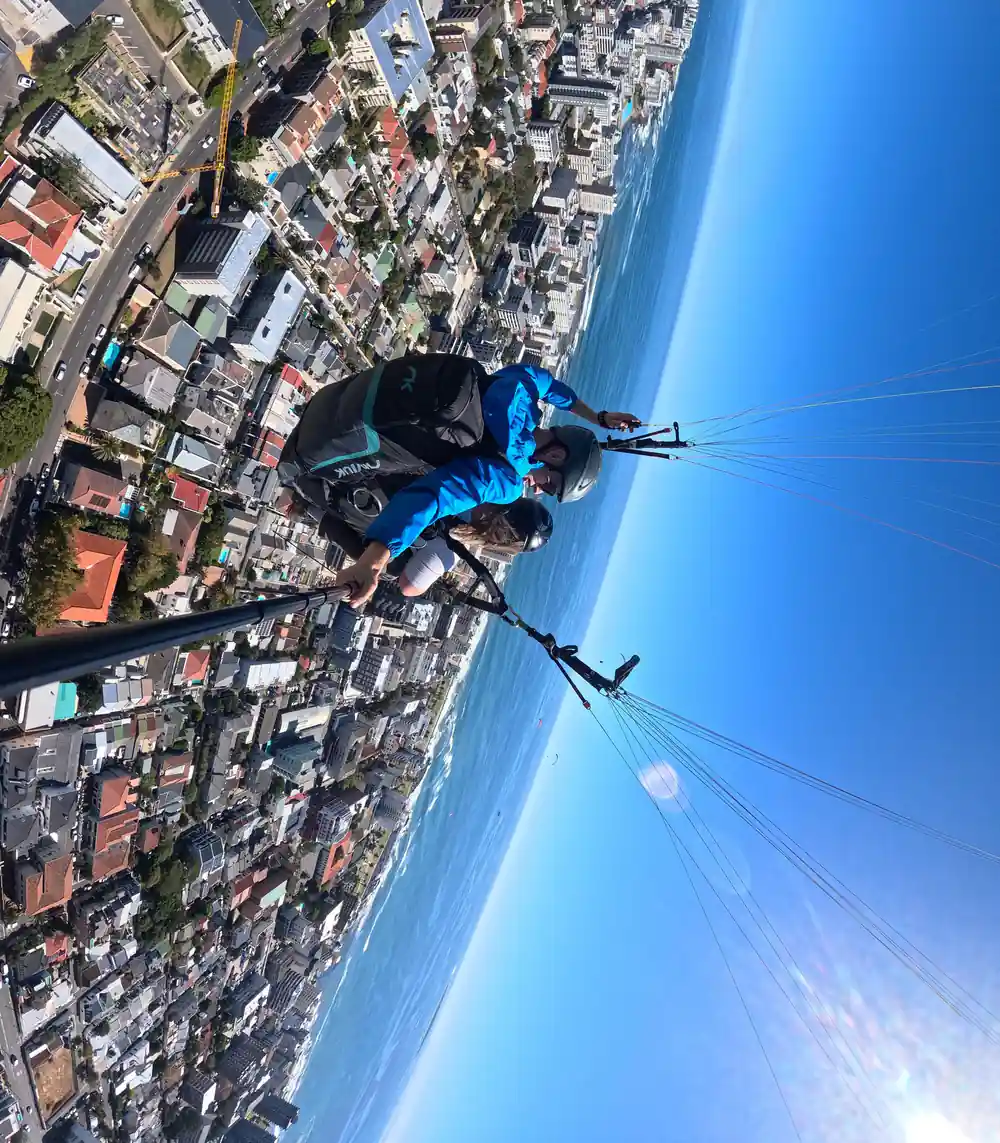
The landing sits away from the launch, somewhere along the coastline the flight tours, and an optional transfer back to the meeting point is offered afterwards. Both details describe a flight built around moving air, from take-off to touchdown, rather than a fixed loop, which is one more reason the whole booking answers to the wind rather than to a clock.
Where to Put This in Your Trip
The most useful thing you can do with a weather-dependent flight is give it somewhere to fail. Book it for one of the first free mornings of your stay, not the last one, and a cancelled slot still leaves days on the calendar to try again before you fly home.
Free cancellation is offered on this booking, which removes the sharper edge of that risk: committing to a slot with no way to change course if the wind, or your own plans, does not cooperate. Message the operator on WhatsApp ahead of the day, book early in your trip, and let a Signal Hill morning decide itself rather than your itinerary deciding it for you.
Check dates for a paragliding flight from Signal Hill
from US$106Reserve now & pay later