The quick version
- An optional transfer back to the meeting point and take-off site is offered once you're down, so getting back to your things is already arranged.
- Sea Point is the seafront suburb below Signal Hill on the Atlantic side, and part of the stretch of coastline the flight heads out over.
- A wing that is still flying can be slowed almost to a stop, so the landing itself is closer to a few steps than to an impact.
- Your only task on the way down is to bring your legs down early and keep them ready to take your own weight.
The last quarter hour of a short flight
The booking runs forty five minutes from the Signal Hill car park and back to it. About fifteen minutes of that belongs to Signal Hill itself: the launch, the flight, and everything that follows in the air. The landing sits inside that same stretch, right at the end, and it is the part almost nobody thinks about while they are still on the ground working out what to wear.
That is worth saying plainly because it changes what the day actually looks like. You do not launch, fly for a long stretch, and come back down at your own doorstep. You launch from Signal Hill, the wing goes out over the coast, and it comes down somewhere else. Getting back from there is a separate, deliberate part of the booking, not an afterthought.
What Sea Point actually is
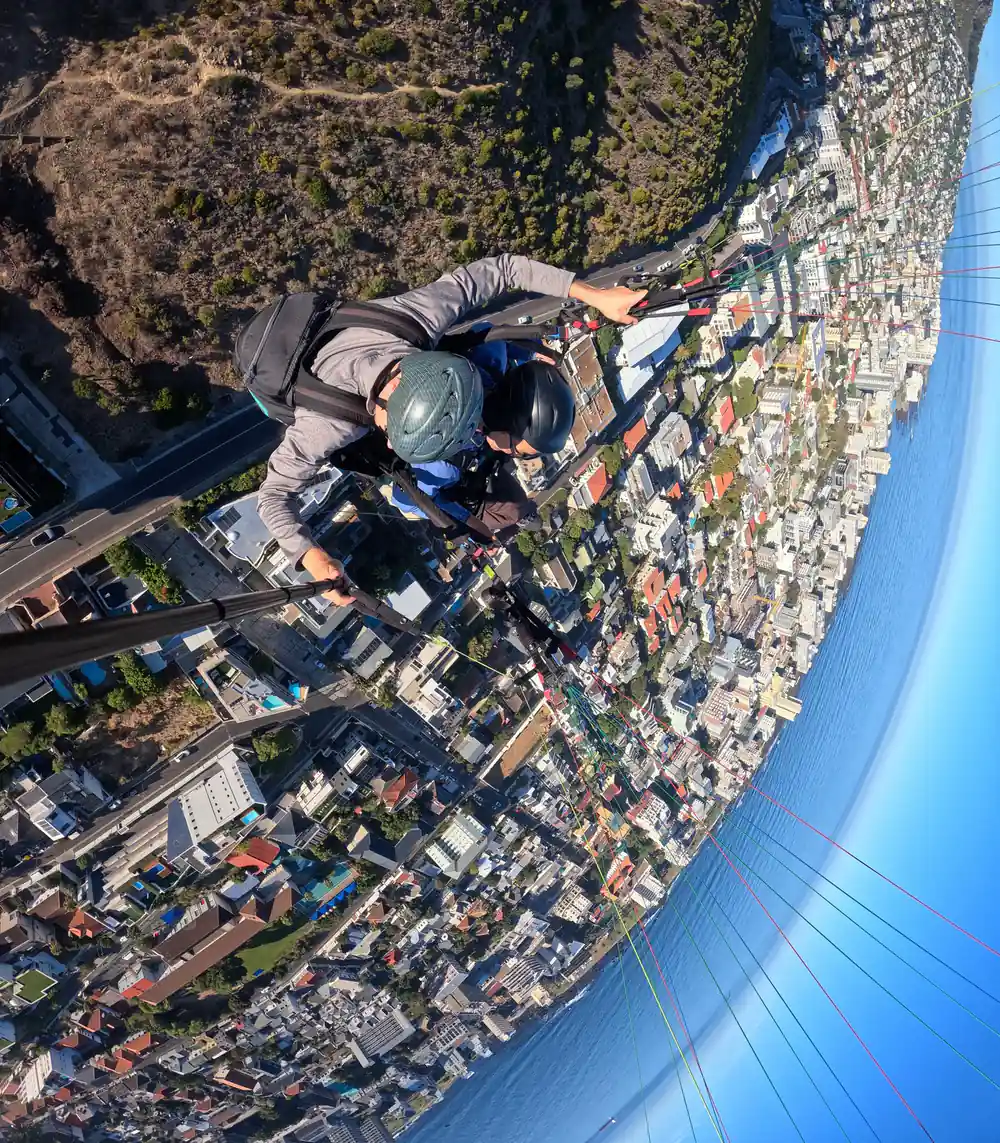
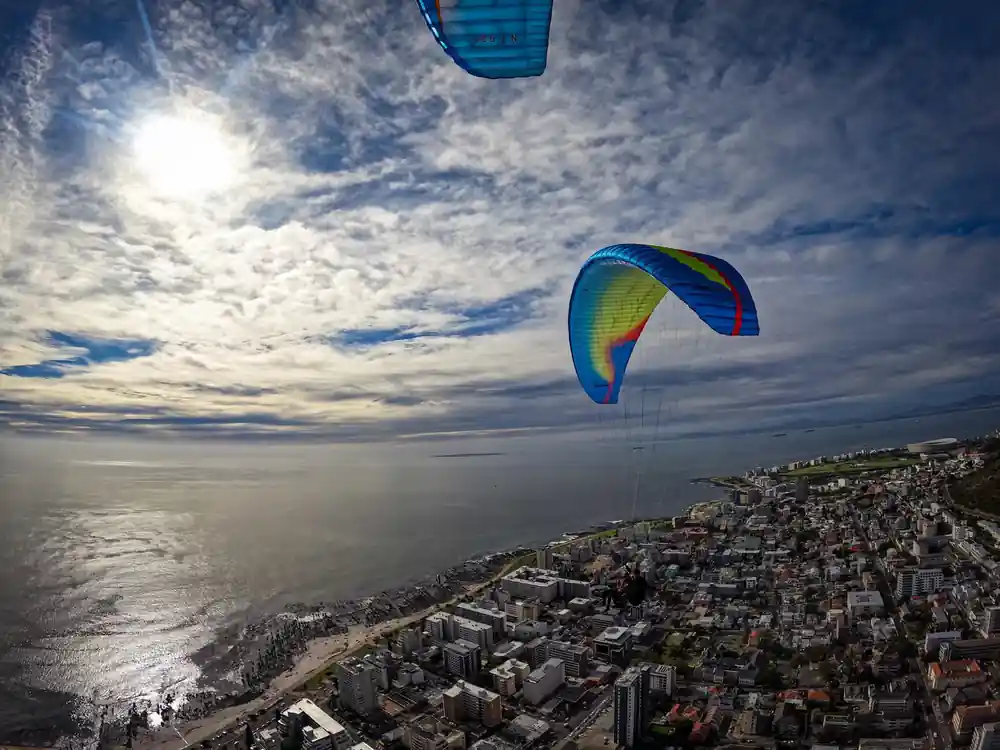
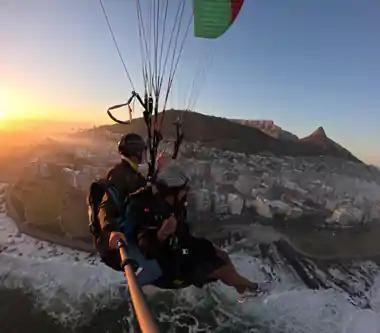
Sea Point is the seafront suburb that sits below Signal Hill on the Atlantic side of the city, between the ridge and the ocean. It is not the launch site and it is not named here as a landing site either. It is the stretch of coast the flight heads out over once the wing leaves the hill, which is why it gives the flight its name.
Looking down from the air, Sea Point is the promenade, the pools and the apartment blocks strung along the water, with Lion's Head and Table Mountain behind you and the Atlantic ahead. Where the wing actually comes down on a given day depends on conditions, not on a fixed spot marked on a map, which is the next thing worth understanding properly.
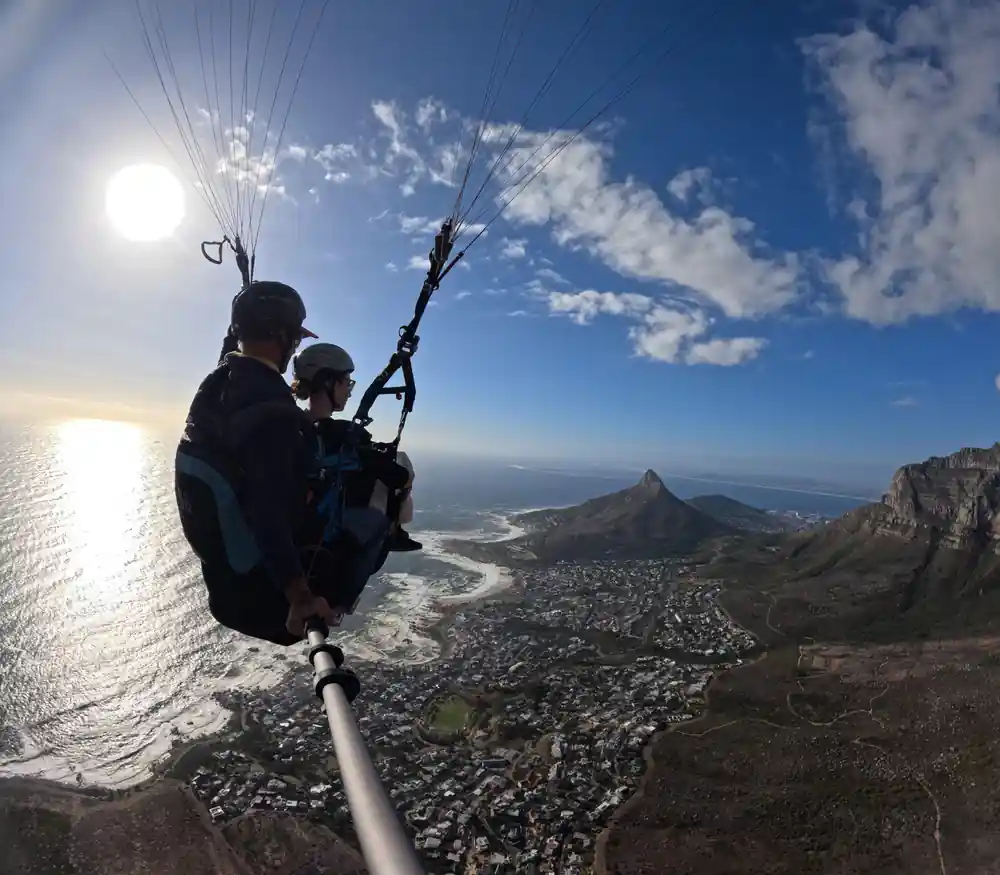
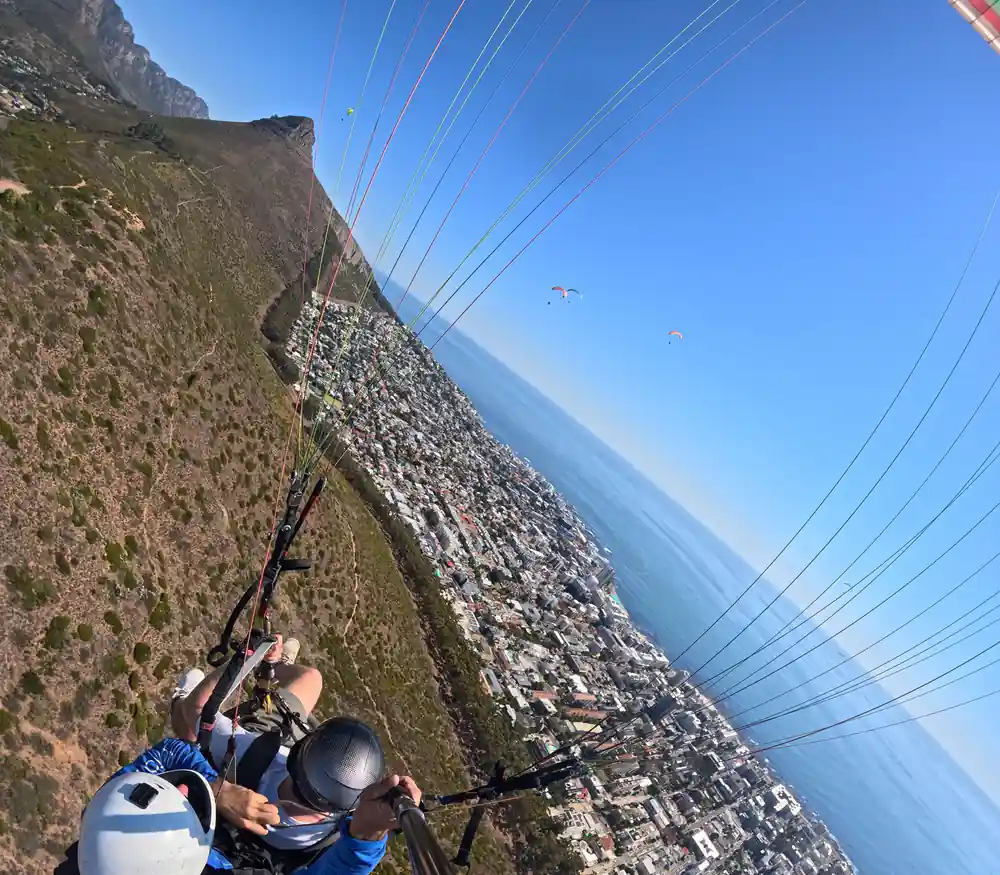
Lion's Head sits between Signal Hill and Table Mountain, and both are landmarks you see from the air rather than places this flight uses. The launch is Signal Hill only. The other two peaks are the skyline behind you as the wing turns out toward the water and the suburb below.
How a paraglider actually lands
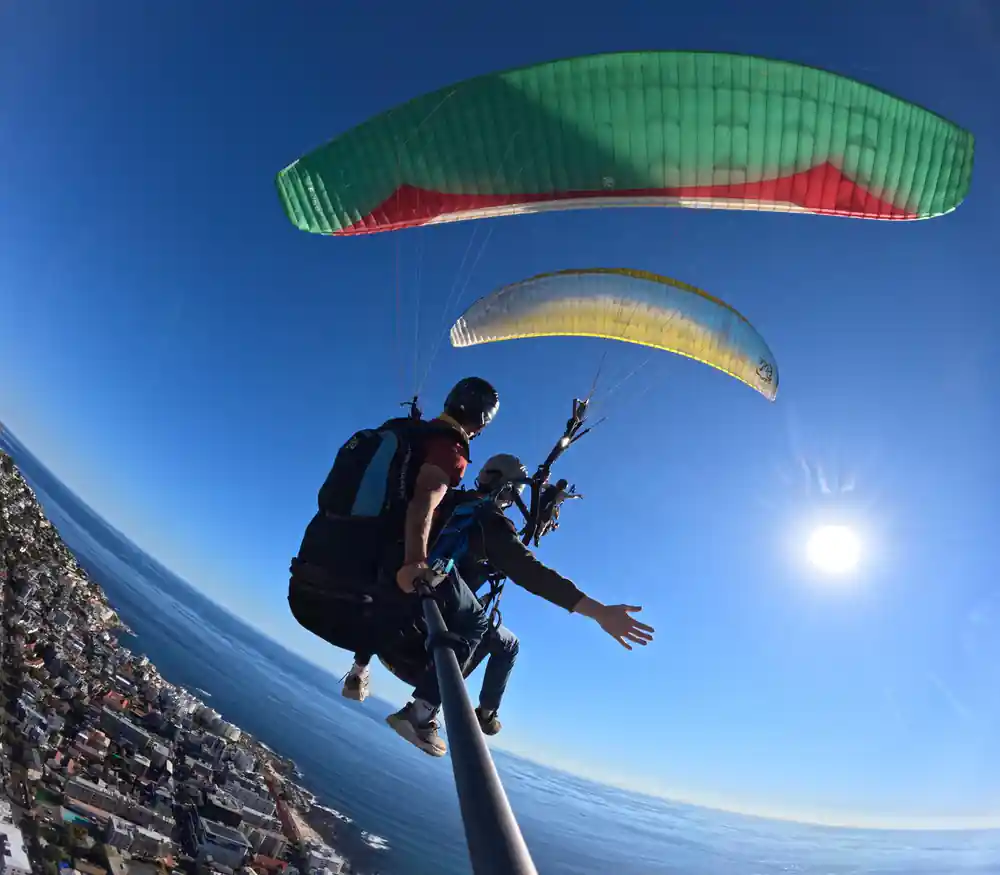
A paraglider landing is not a fall that gets interrupted. The wing is still generating lift on the way down, and a pilot can flare it, pulling the trailing edge to slow the whole thing almost to a stop just before it reaches the ground. Done well, the last few metres feel less like stopping and more like the flight running out of speed on its own terms.
That is the general mechanics of any paragliding landing, tandem or solo, and it is why the moment gets built up in people's heads more than it deserves. There is no separate skill required of the passenger beyond one simple thing, covered next: keeping your legs down and ready.
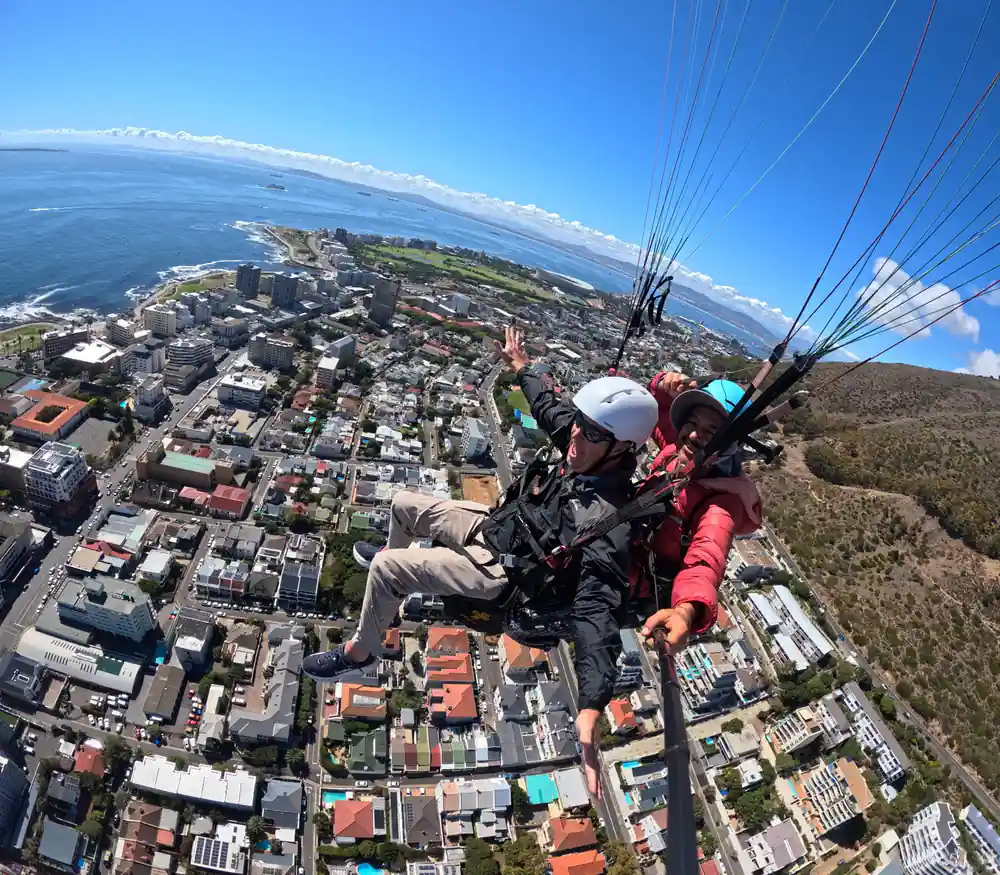
The Atlantic coastline the flight heads out over, seen from Signal Hill.
Who picks the spot, and why
The pilot chooses where to land from the air, not in advance. Wind and available open space are the two things that decide it. Cape Town's summer south easter, known locally as the Cape Doctor, is strong enough that it is treated as the deciding factor in whether anyone flies at all that day, and it plays the same role in where a flight comes down.
You are not shown a landing field beforehand and should not expect one. The pilot reads the ground the way a driver reads traffic, adjusting the approach right up until the final stretch, and that judgement is the actual skill being paid for on the way down, not only on the way up.
Because so much of the day rests on wind, the operator asks you to get in touch beforehand, over WhatsApp, for an update on conditions. That contact happens well before anyone talks about a landing spot. It is the same wind, checked earlier and read again from the air, that decides both whether the flight goes ahead and where it ends.
What you do with your feet
Your job on the way down is small and specific: bring your legs down early, and keep them ready to take your own weight. You are not steering, and you are not choosing the spot. You are the one part of the landing that has to be in the right position at the right moment, and the instructor tells you when.
Once the wing has been slowed and the ground is close, the touchdown itself is closer to a few walking or jogging steps than to anything you would call an impact. That is the point of flaring the wing before you arrive rather than after, and it is the whole reason the landing is calmer than people expect.
Getting back to the car park
Making your own way up to the Signal Hill car park before the flight is on you. Getting back afterwards is not: an optional transfer back to the meeting point and take-off site is offered once you have landed, which is the detail that actually matters here, because it means you are not left to work out transport from wherever the wind put you down.
It is worth taking that transfer rather than assuming you will sort something out on the spot. You will have just landed somewhere other than where you started, your car or your lift will most likely still be waiting at the car park on Signal Hill Road, and the return has already been built into the booking so that it isn't a problem you have to solve alone.
See available dates for the Signal Hill flight
from US$106Reserve now & pay later
What people want to know
Where do you land after the flight?
Do you land in Sea Point?
What is Sea Point?
How do you get back to Signal Hill?
Is the landing hard or does it hurt?
What do you do with your feet when landing?
How long is the flight down?
What decides where the pilot lands?
The descent, step by step
Turning for the approach
The pilot brings the wing round toward open ground while it is still flying, not dropping.
Reading the wind
From the air, wind direction and the space available decide where the approach heads, not a fixed plan.
Slowing the wing
The glide flattens and speed comes off gradually, well before the ground is close.
Legs down
Your legs come down early and stay ready to take your own weight, on the instructor's word.
Touching down
A few walking or jogging steps, not an impact, thanks to the wing being flared just before you land.
Back to the car park
An optional transfer is offered from wherever you come down, back to the meeting point and take-off site.